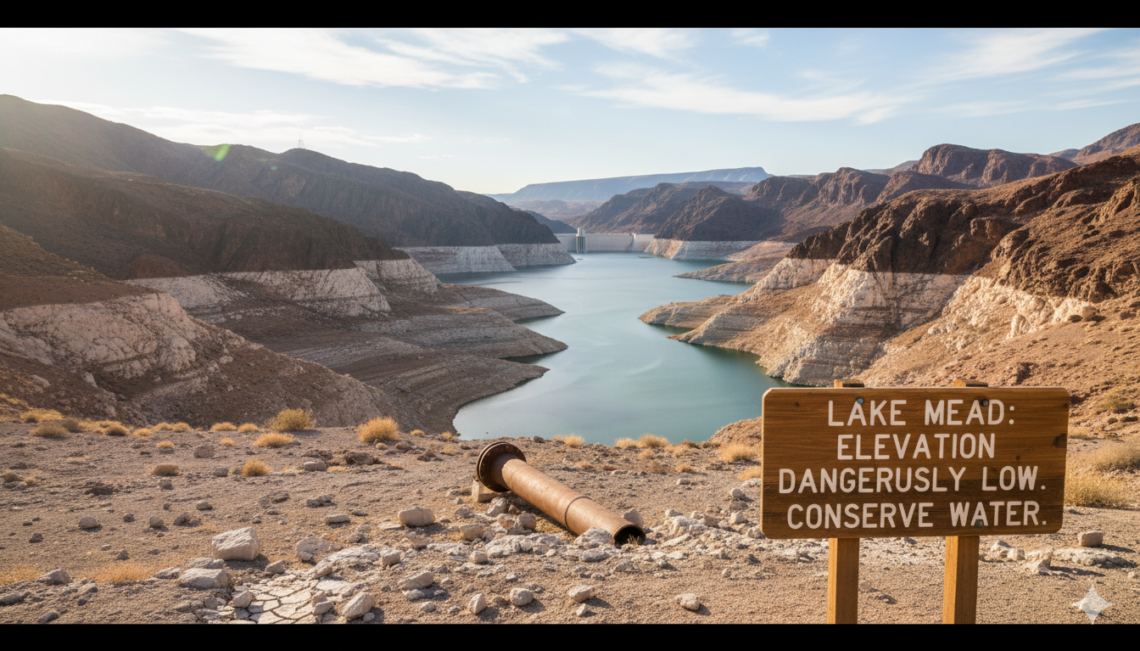
Have you ever looked at a giant swimming pool and watched the water slowly disappear? That is exactly what is happening to America’s largest man-made reservoir right now. The lake mead water level is one of the most talked-about environmental topics in the United States. Located on the border of Nevada and Arizona, this massive body of water provides life-sustaining hydration and electricity to millions of people in the Southwest. Sadly, a historic megadrought and high demand are causing the reservoir to shrink rapidly.
If you live in Las Vegas, Phoenix, or Los Angeles, this isn’t just an environmental news story. It is a daily reality that affects your utility bills, your neighborhood drinking water, and even the local food prices. In this guide, we will break down the latest 2026 updates regarding the lake mead water level. We will use simple terms, clear tables, and data straight from the experts. Let’s dive in and look at what is happening to our most vital water resource.
What is the Lake Mead Water Level Today?
As of June 2026, the lake mead water level is sitting right around the critical 1,050-foot mark above sea level. To put that into perspective, a full reservoir sits proudly at 1,229 feet. That means we are currently staring at roughly 180 vertical feet of missing water. If you visit the lake today, you cannot miss the famous “bathtub ring.” This is a massive, white band of mineral deposits left on the canyon walls, showing just how high the water used to be.
The U.S. Bureau of Reclamation monitors this gauge daily. Recently, the water level has been dropping by a fraction of a foot almost every single night. The current storage is hovering at just 29% of its total capacity. This historic drop is a direct result of a poor winter snowpack season up north and long-term climate changes in the Colorado River basin.
Why is the Colorado River Drought Happening?
The lake mead water level does not drop just because the weather is hot in Las Vegas. The real story begins hundreds of miles away in the Rocky Mountains. The Colorado River relies heavily on melting winter snow to fill its banks. When winter snowpack crumbles below historical averages, less water flows downstream into Lake Powell and Lake Mead.
For the past two decades, the American Southwest has faced a relentless megadrought. This is the driest period the region has seen in over 1,200 years. At the same time, farming communities and fast-growing cities keep drawing their historical shares of water. This overallocation means we are simply taking out more water than Mother Nature is putting back in.
Understanding the Hoover Dam Minimum Power Pool
One of the biggest concerns with a falling lake mead water level is electricity. The historic Hoover Dam uses the weight of the lake’s water to spin giant turbines and generate clean power. This facility produces electricity for up to 1.3 million people across three states. However, when the water level drops, the water pressure drops along with it.
The dam enters a major danger zone when the reservoir hits 1,050 feet. At this level, many turbines lose their efficiency. Several turbines have already been shut down because of the low water. If the lake mead water level continues its downward trend toward the 950-foot mark, we will reach the “minimum power pool.” At that exact point, the turbines must stop completely to prevent permanent damage, causing a massive energy shortage.
What Happens if We Reach Dead Pool Elevation?
There is a terrifying phrase that water managers use when discussing the lake mead water level: “dead pool.” This is not a comic book character; it is a worst-case infrastructure disaster. Dead pool occurs if the water level plummets down to 895 feet above sea level.
At 895 feet, the water drops below the lowest exit gates of the Hoover Dam. If this happens, water will physically stop flowing downstream through the dam. The Colorado River would effectively dry up past this point. This would cut off water supplies to southern California, western Arizona, and Mexico. It would also devastate millions of acres of farmland that grow America’s winter vegetables.
How the Reservoir Level Impacts Your Monthly Bills
You might wonder how a dropping lake mead water level impacts your everyday wallet. The truth is, the consequences are already showing up on your monthly bills. Because Hoover Dam is producing less cheap hydroelectric power, local utility companies have to buy expensive electricity from elsewhere. They often purchase power from natural gas plants or open spot markets.
These extra costs do not just disappear. They are passed directly to you. If you check your recent electric bills, you might notice new line items like a “purchased power surcharge.” Additionally, local water districts are spending billions of dollars on advanced treatment facilities to clean the shallow water, which drives up your monthly water bill.
The Million-Dollar Intake Tunnels Under the Mud
As the lake mead water level continued to crash over the years, the city of Las Vegas realized it had a massive problem. The city’s original water intake pipes were located high up in the lake. If the water level dropped below those pipes, the city would go completely dry.
To save the city, the Southern Nevada Water Authority built a massive project known as the “Third Straw.” This is a $1.5 billion underground tunnel that taps into the very bottom of Lake Mead at an elevation of 860 feet. Thanks to this incredible engineering feat, Las Vegas can still pump clean drinking water even if the reservoir approaches dead pool levels. However, many other cities do not have this backup option.
Mandatory Water Restrictions and Tier Shortages
The federal government uses a tier system to manage the shrinking lake mead water level. When the lake drops below certain heights, the Bureau of Reclamation declares official water shortages. We are currently operating under strict shortage declarations that force states to cut back on their water use.
Arizona and Nevada have taken the hardest hits so far, with farmers losing large percentages of their irrigation water. In local neighborhoods, you can see these rules in action. Cities have banned decorative green grass, limited lawn watering to specific days, and prohibited washing cars at home. These strict measures are no longer optional—they are legally enforced rules to keep the reservoir alive.
Critical Infrastructure and Water Quality Issues
A lower lake mead water level does not just mean less water; it also means worse water. When a reservoir shrinks, the remaining water gets warmer. Warm water makes it easier for algae to grow. It also concentrates natural minerals and heavy metals that usually sit safely at the bottom of the lake.
Scientists have recently noticed rising levels of elements like arsenic and manganese in raw water samples. While your tap water is still perfectly safe to drink thanks to advanced treatment plants, cleaning this water requires more chemicals and advanced filtration. This extra processing places a heavy burden on our public infrastructure.
Future Projections: Where is the Water Headed?
What does the future hold for the lake mead water level? The latest 24-month hydrology models from the federal government paint a challenging picture. According to the Bureau of Reclamation’s May 2026 report, the median projection shows the lake could sink down to 1,020 feet by July 2027.
If this projection comes true, it will shatter the previous all-time record low of 1,040 feet set back in the summer of 2022. That was the famous year when the receding waters uncovered sunken boats and historic artifacts from the mud. The coming years will require unprecedented cooperation between states to prevent the reservoir from collapsing entirely.
Redrawing the Historic Colorado River Compact
The rules for sharing the river were written way back in 1922 under the Colorado River Compact. Back then, leaders thought the river had much more water than it actually does. Today, seven states and Mexico are locked in tense negotiations to rewrite these ancient rules before they expire next year.
Arizona has suggested a new plan that bases water deliveries on actual river flows rather than hopeful projections. However, getting states like California, Nevada, and Wyoming to agree on who cuts their water usage is an incredibly difficult task. The future of the lake mead water level depends entirely on whether these leaders can find a fair way to share a shrinking river.
Lake Mead Water Level Deep Detailing Data
To help you visualize the current situation, we have put together a comprehensive data table. This shows the critical milestones of the lake mead water level, what happens at each stage, and where we stand today.
| Reservoir Elevation (Feet) | Operational Significance & System Status | Current 2026 Risk Level |
| 1,229 ft | Full Pool Capacity (Last reached in 1983) | No Risk (Historically distant) |
| 1,075 ft | Historical Tier 1 Shortage Trigger Line | Passed (Triggered mandatory cuts) |
| 1,050 ft | Current 2026 Level / Primary Power Efficiency Loss | Critical Active Danger |
| 1,035 ft | Only 5 of 17 Hoover Dam Turbines Can Run | High Risk (Projected for early 2027) |
| 950 ft | Minimum Power Pool (Hydroelectric generation stops) | Extreme Future Threat |
| 895 ft | Dead Pool Level (Water stops flowing downstream) | Ultimate System Collapse |
Frequently Asked Questions
1. What is the current lake mead water level in 2026?
As of June 2026, the water level is hovering right around 1,050 feet above sea level. This is roughly 180 feet below the lake’s full capacity and places the reservoir at just 29% total storage volume.
2. Can Hoover Dam still make electricity at the current level?
Yes, but it is making much less power than it used to. The dam’s total output is down by more than 30 percent. If the water drops below 1,035 feet, twelve of the seventeen turbines will have to shut down completely.
3. What exactly is a dead pool level?
Dead pool is an infrastructure crisis that happens at 895 feet. At this height, water sinks below the dam’s lowest outlet pipes. Water would stop flowing downstream, cutting off supplies to millions of people.
4. Why is the water level dropping so quickly this summer?
The drop is caused by a poor winter snowpack in the mountains, hot summer evaporation, and high water demands from cities and farms downstream that rely on the Colorado River basin.
5. Does Las Vegas run out of drinking water if the lake drops?
No. Las Vegas built a special $1.5 billion intake tunnel called the “Third Straw” at the very bottom of the lake (860 feet). This allows the city to pump water even if other states get cut off.
6. How can regular citizens help protect the water level?
You can help by reducing outdoor watering, planting native desert landscaping instead of grass, fixing household leaks quickly, and supporting local water recycling programs.
Conclusion: Why We Must Care About Our Water
The shrinking lake mead water level is a loud wake-up call for everyone living in the American West. It shows us that our water supplies are finite and precious. While engineering marvels like underground intake straws and water recycling give us temporary safety, they cannot replace the water that nature provides.
We must all change how we view and use water every single day. By supporting smart conservation policies and reducing our personal water footprints, we can help protect this beautiful reservoir for generations to come. What changes are you making in your home to save water this year? Drop a comment below and join the conversation!