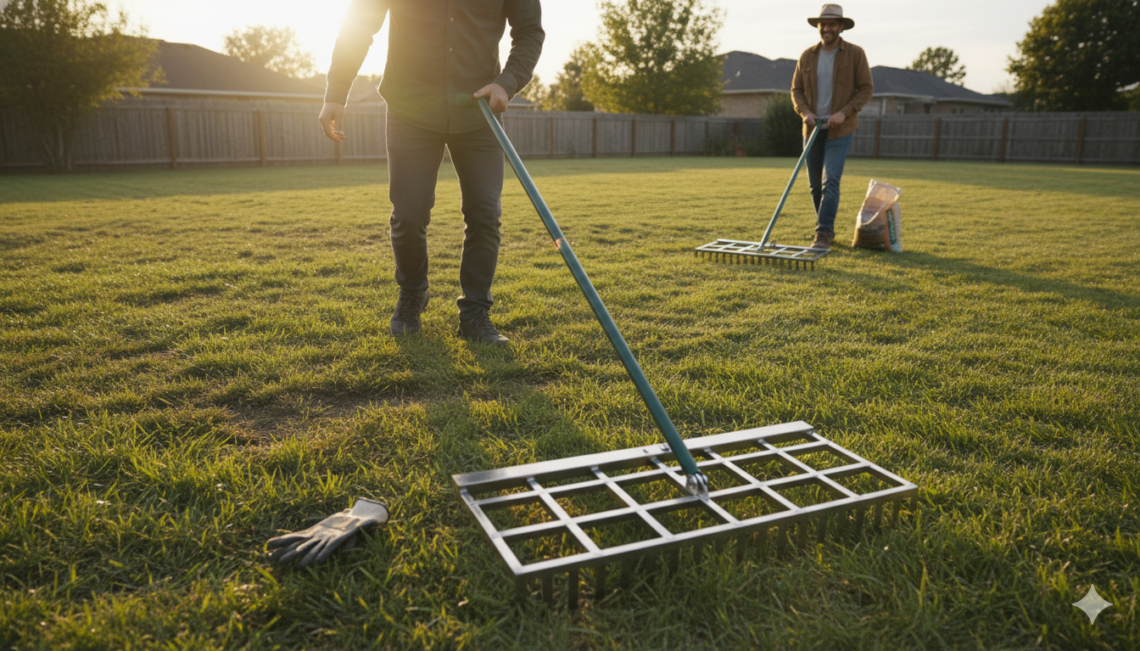
Imagine walking across your yard and suddenly tripping on a hidden dip. Bumpy grass is frustrating, hard to mow, and can even cause painful ankle sprains. Luckily, you can fix these uneven spots yourself without spending thousands of dollars on professional landscaping services. The secret tool you need is a high-quality lawn leveling rake. This simple device looks like a wide, flat metal grid attached to a long handle, and it works absolute wonders.
When you push this specialized tool across your yard, it smoothly glides over the high spots. At the same time, it drops dirt perfectly into the low spots. In this guide, we will look at exactly how this tool can transform your bumpy yard into a beautiful, flat green carpet that your neighbors will envy.
What Exactly Is a Lawn Leveling Rake?
A lawn leveling rake is a unique yard care tool designed specifically to flatten out uneven ground. Unlike a standard leaf rake with flexible plastic tines, this tool features a heavy, rigid rectangular base made of strong metal. The flat base distributes weight evenly across the surface of your soil. It effortlessly pushes down tall mounds of dirt while leaving behind enough material to fill deep holes.
Most of these tools are made from stainless steel or heavy aluminum so they do not rust when touching wet soil. The long handle gives you excellent leverage, which keeps your back straight and prevents sore muscles while you work. It is the ultimate tool for serious homeowners who want a perfectly smooth lawn.
Why Your Yard Needs Regular Leveling
Over time, almost every yard develops annoying bumps and shallow dips from natural causes. Heavy rainfall washes loose soil away, while underground pests like moles tunnel through the earth and create soft, sinking spots. Walking on wet grass can also leave deep footprints that dry into hard ruts.
Using a lawn leveling rake protects your expensive lawn mower from hitting hidden rocks and scraping against high dirt mounds. It creates a safe, uniform surface for your children and pets to run around without tripping. Plus, a flat yard ensures that water spreads evenly instead of pooling in soggy, muddy low spots that rot your grass roots.
Key Benefits of Using a Leveling Tool
Investing in a lawn leveling rake offers massive benefits for your weekend yard care routine. First, it saves you an immense amount of manual labor compared to using a basic garden shovel. The wide metal base covers a large surface area with every single push, which cuts your working time completely in half.
Second, it helps your grass grow much thicker and healthier by spreading thin layers of nutrients evenly. It prevents you from accidentally burying and smothering your existing grass under massive piles of heavy dirt. Your yard will look cleaner, feel much softer under your bare feet, and become far easier to manage.
Choosing the Best Lawn Leveling Rake Size
These helpful tools come in several different widths, and choosing the right size depends entirely on your yard. A small model measuring 30 inches wide is perfect for tight spaces, narrow paths, and yards with many curved garden beds. It is lightweight and incredibly easy to maneuver around trees and heavy patio furniture.
For large, open spaces, a wide 45-inch lawn leveling rake is the absolute best option. The extra width bridges across wide depressions, which gives you a much flatter finish over massive sections of grass. However, keep in mind that wider steel models are heavier to push and require a bit more physical strength.
The Best Soil Mix for Leveling Grass
You should never use plain, heavy clay dirt from your garden beds to fix low spots in your yard. The best material is a loose, custom blend of 50% clean masonry sand and 50% rich organic compost. Sand provides a strong, permanent structure that resists packing down, while compost feeds your grass roots.
Before you start, make sure your topsoil mixture is completely dry so it flows smoothly through the grass blades. Wet dirt clumps together tightly and becomes almost impossible to spread evenly with your lawn leveling rake. Mixing your own material guarantees the best results for a healthy, vibrant green lawn.
How to Prepare Your Lawn for Leveling
You cannot just throw dirt onto long grass and expect a smooth finish. First, you must cut your grass quite short, down to about 1.5 inches, so the soil can actually reach the ground. Next, use a standard garden rake to remove thick thatch, dead leaves, and loose rocks from the surface.
If your soil feels rock-hard when you step on it, consider using a lawn aerator tool first. Core aeration punches small holes into the earth, which helps the new topsoil blend deeply with the old ground. Once your yard is clean, mowed, and aerated, you are officially ready to use your lawn leveling rake.
Step-by-Step Guide to Leveling Your Lawn
Start by dumping small shovels of your dry soil mix directly onto the sunken areas of your yard. Next, place your lawn leveling rake flat on top of the first pile of dirt. Hold the handle firmly and push the tool forward and backward in a smooth, steady motion across the grass.
As you push, the metal grid will catch the extra soil and drop it into the low spots. Keep raking in different directions until the tips of your existing grass blades peak through the fresh dirt. Repeat this simple process across your entire yard until the ground looks completely uniform and flat.
Comparing Common Lawn Care Rakes
| Rake Type | Best Used For | Base Material | Base Design |
| Lawn Leveling Rake | Flattening uneven ground and spreading topsoil | Stainless Steel / Aluminum | Heavy, flat metal grid |
| Thatch Rake | Pulling up dead grass and moss from the roots | High-Carbon Steel | Sharp, curved metal teeth |
| Leaf Rake | Gathering light leaves, twigs, and grass clippings | Plastic / Flexible Wire | Wide, flexible fan shape |
| Garden Rake | Breaking up hard dirt clods and moving heavy gravel | Rigid Forged Steel | Short, thick straight tines |
When Is the Best Time to Level Your Yard?
Timing is highly critical because your grass needs to be actively growing to survive being covered in dirt. The absolute best time for cool-season grasses, like Bluegrass or Fescue, is during the early autumn months. For warm-season grasses like Bermuda, wait until late spring when the weather is consistently warm.
Avoid using your lawn leveling rake during a severe summer drought or in the freezing winter cold. Leveling during these stressful times can easily stunt or kill your grass. Always check your local weather forecast to ensure you have a few weeks of mild, rainy weather ahead.
Caring for Your Leveling Tool Long-Term
A heavy-duty lawn leveling rake can easily last for decades if you take care of it properly after use. Wet soil contains moisture and fertilizers that can slowly corrode metal parts over time. After you finish working, always spray your tool thoroughly with a garden hose to remove stuck-on mud.
Wipe the metal base completely dry with an old towel before storing it away in your garage. If your tool has a wooden handle, rub a light coat of linseed oil onto it once a year. This simple trick prevents the wood from drying out, cracking, or causing painful splinters during yard work.
Common Leveling Mistakes to Avoid
The biggest mistake homeowners make is dumping too much dirt at once and burying their grass completely. Grass needs access to sunlight to grow, so never spread a soil layer thicker than one-half inch at a time. If your holes are deep, fill them gradually over several months.
Another mistake is using a lawn leveling rake on soaking wet ground, which creates a sticky, muddy mess. Always wait for a dry weekend so the soil mixture can slide easily between the individual grass blades. Patience ensures you get a beautiful, professional-looking yard without destroying your existing lawn.
Frequently Asked Questions
Can I use a regular garden rake instead of a lawn leveling rake?
No, a standard garden rake has sharp teeth that dig into the earth and rip up healthy grass roots. A leveling rake has a flat, smooth bottom designed to glide across the lawn without causing any damage.
How deep of a hole can I fix at one time?
You should only fix dips that are less than one-half inch deep per application. If you have deep ruts, fill them halfway, wait for the grass to grow through, and then apply more dirt later.
Do I need to plant new grass seed after leveling my yard?
If your existing grass is healthy and you only apply a thin layer of soil, it will grow through naturally. However, if you are filling deep holes, you should scatter fresh grass seed over the bare spots.
Should I water my lawn immediately after raking?
Yes, giving your yard a gentle watering helps the new soil settle deeply into the low spots. It also wakes up the grass roots and encourages quick growth through the new topsoil layer.
Can I use pure sand to level my bumpy yard?
Pure sand works well for small adjustments on clay soils, but it lacks vital nutrients. Mixing sand with organic compost is much better because it feeds your lawn while keeping the surface completely flat.
How often should I level my grass?
Most homeowners only need to use a lawn leveling rake once every two to three years. However, if you have active moles or heavy backyard traffic, you might need to touch up spots every spring.
Conclusion: Enjoy Your Perfect Yard
Achieving a perfectly smooth, beautiful lawn does not require hiring a crew of expensive professionals. With a high-quality lawn leveling rake and a little bit of patience, you can easily fix bumps yourself. Taking the time to flatten your yard makes mowing a breeze and creates a safe place for your family to play. Grab your tools, pick a beautiful dry weekend, and start transforming your bumpy grass into a flawless green masterpiece today! Feel free to share your lawn care success stories or ask questions in the comments below!