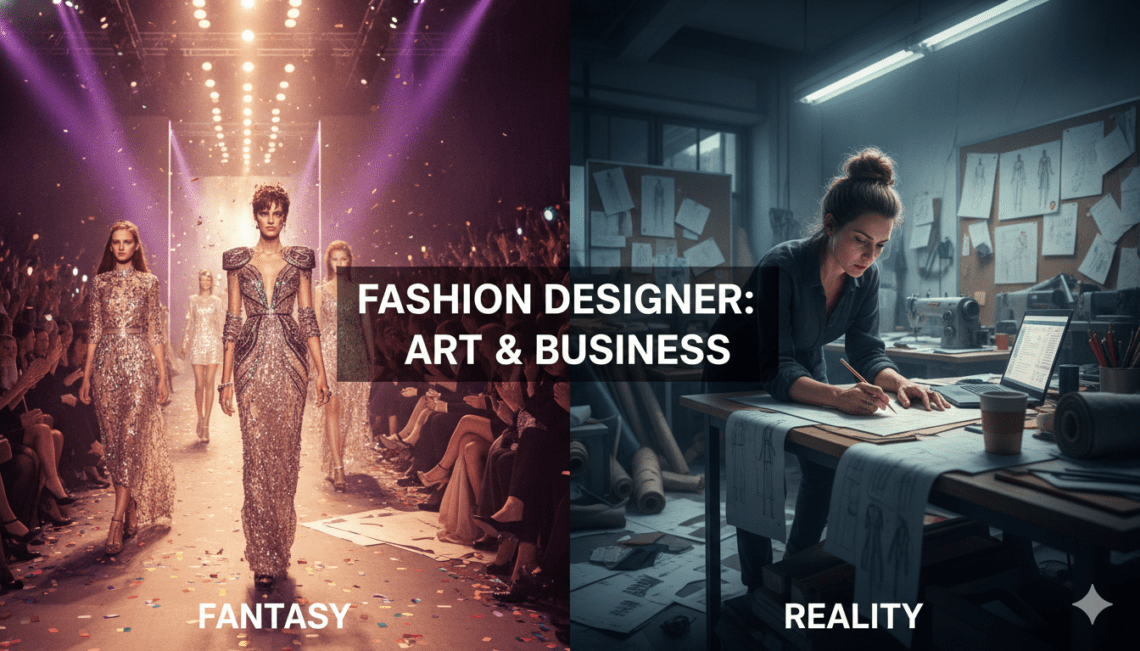
The glittering world of style often looks like a non-stop party on glamorous runways. However, the everyday reality of this industry requires an incredible amount of hard work, grit, and business strategy. If you have ever wondered what the actual job of a fashion designer entails, you are in the right place. It is a career that beautifully blends pure artistic imagination with highly technical sewing and manufacturing skills.
At its core, the job of a fashion designer is to take a tiny spark of an idea and turn it into a physical piece of clothing that people love to wear. These professionals do not just sketch pretty pictures all day. They are deeply involved in every single step of the creation process, from picking the initial thread to approving the final retail product. Let us dive deep into this exciting career path and look closely at what these creative professionals do every single day.
What Does a Fashion Designer Do Every Day?
The daily job of a fashion designer changes constantly depending on the time of the year. During one week, a designer might spend hours researching global styles and looking at mood boards for inspiration. The next week, they could be trapped in a busy factory room touching fabric samples and arguing over the exact placement of a zipper. They balance their time between quiet solitary art creation and high-energy group meetings.
In a typical workday, a professional will spend significant time using digital tools to draw out new clothing concepts. They also meet with fabric suppliers to find the absolute best materials for their upcoming clothing lines. The job of a fashion designer requires constantly looking into the future to predict what colors and styles people will want to buy a year from now.
Core Duties and Daily Responsibilities
When you look at the official job description, the job of a fashion designer has a clear set of tasks. First, they must study consumer behavior and global buying trends to stay ahead of the market. Next, they select a central theme for their seasonal collection so that all the outfits look cohesive together on the retail floor.
After settling on a grand theme, they use special computer-aided design software to build high-quality digital mockups. They also must manage production budgets and talk directly with overseas manufacturing factories. The job of a fashion designer ensures that the final garment looks exactly like the original sketch while remaining affordable to produce.
Essential Creative Skills You Need to Succeed
To do the job of a fashion designer well, you need a strong mix of natural artistic talent and learned technical skills. First, you must understand color theory and know how different shades interact under bright runway lights. You also need a deep understanding of textiles so you know exactly how a fabric will drape or fold around a human body.
Furthermore, visual storytelling is incredibly important in this field. You must be able to explain your creative vision to investors and pattern makers who might not see the world the same way you do. Having a strong unique point of view is what separates top-tier industry leaders from everyday workers.
The Technical Side of Creating Clothes
Many people do not realize that the job of a fashion designer involves a massive amount of technical engineering. You cannot just draw a beautiful dress; you must actually know how to build it from scratch. This means mastering complex pattern making, garment construction, and hand-draping techniques on a physical dress form.
Designers create highly detailed specification documents known in the industry as tech packs. These digital blueprints tell the factory workers the exact measurements, stitching styles, and hardware to use for mass production. Without these precise technical skills, a beautiful drawing will never become a wearable reality.
Crucial Software and Modern Digital Tools
Technology has completely changed the modern job of a fashion designer over the last few years. While hand-sketching with pencils is still a wonderful skill, almost all major apparel companies now require advanced digital literacy. Designers use programs like Adobe Illustrator and Photoshop to create flat sketches and detailed textile patterns.
Furthermore, advanced 3D fashion software like CLO3D and Marvelous Designer allows professionals to build virtual outfits on digital avatars. This cutting-edge technology saves companies thousands of dollars by reducing the need for physical fabric samples. It makes the design process much faster and far more environmentally sustainable.
Understanding Different Industry Specialties
The job of a fashion designer can look wildly different depending on the specific area of the industry you choose to enter. Some creators work in haute couture, making incredibly expensive custom-made luxury gowns for celebrity clients. Others work in mass-market ready-to-wear apparel, creating comfortable everyday clothes that sell in major retail stores worldwide.
There are also specialists who focus entirely on athletic sportswear, children’s clothing, footwear, or fashion accessories like handbags and belts. Each unique niche requires a completely different understanding of materials, safety regulations, and manufacturing techniques.
Complete Overview of Fashion Careers
To give you a clear picture of how this industry is organized, here is a detailed breakdown of the common job roles, their main tasks, and what you need to land the position.
| Job Title | Main Responsibilities | Key Required Tools | Typical Work Environment |
| Assistant Designer | Sourcing fabric samples, organizing mood boards, and updating tech packs. | Adobe Illustrator, Excel | Fast-paced corporate design studio |
| Technical Designer | Evaluating garment fit, correcting construction patterns, and checking factory quality. | CAD Software, Measuring Tools | Fitting rooms and manufacturing plants |
| Fashion Designer | Creating original concepts, choosing final fabrics, and leading seasonal themes. | 3D Design Software, Photoshop | Creative offices and supplier markets |
| Creative Director | Steering the overall look of the entire brand, approving collections, and leading marketing campaigns. | Trend Reports, Mood Boards | Executive suites and global runway shows |
Step-by-Step Educational Journey
Getting the proper training is a major step toward landing the job of a fashion designer at a top apparel brand. While raw talent is wonderful, employers heavily favor candidates who have a structured technical education.
1.Earn a Relevant Degree:2 to 4 Years.
Enroll in a university or specialized design school to study fashion design, apparel technology, or textile development.
2.Master Design Software:Ongoing Practice.
Spend hours practicing with industry-standard digital tools like Adobe Illustrator, Photoshop, and 3D garment simulation programs.
3.Complete an Industry Internship:3 to 6 Months.
Work as an intern at an established fashion house to gain real-world experience, see how factories operate, and make industry connections.
4.Build a Professional Portfolio:Continuous Updates.
Compile your absolute best digital sketches, tech packs, and photos of finished physical garments into a stunning visual lookbook to show employers.
Salary Expectations and Workplace Environments
The money you earn in the job of a fashion designer varies greatly based on your experience level and where you live. Entry-level assistant designers often start with modest wages, but senior creative directors at major luxury labels can earn very high salaries. Most corporate design jobs are located in major style hubs like New York City, Los Angeles, London, and Paris.
The work environment can be quite stressful, with tight seasonal deadlines and long hours spent preparing for major product launches. Many independent creators also choose to work freelance, which gives them more creative freedom but requires managing their own business finances.
The Evolving Future of the Industry
The job of a fashion designer is changing rapidly due to new global cultural shifts. Today, there is a massive industry focus on eco-friendly sustainability and ethical garment manufacturing. Modern designers must learn how to create beautiful items using recycled materials and zero-waste pattern layouts.
Consumers are demanding more transparency about how their clothes are made. This means the future job of a fashion designer will involve collaborating closely with environmental scientists and supply chain experts to ensure clothing production does not harm our planet.
Frequently Asked Questions
Do I need to know how to sew to become a fashion designer?
Yes, knowing how to sew is incredibly helpful for the job of a fashion designer. Even if you do not sew the final pieces yourself, you must understand garment construction to create designs that can actually be put together by a factory worker.
What is the difference between a fashion designer and a stylist?
A fashion designer creates original clothing pieces from scratch using raw fabrics and technical drawings. A fashion stylist takes existing clothes from various brands and mixes them together to create beautiful outfits for magazines, music videos, or celebrity events.
Is the fashion industry difficult to find a job in?
Yes, it is a highly competitive field because so many creative people want to enter the industry. Having an amazing digital portfolio and real-world internship experience is the best way to stand out and secure a job.
Do fashion designers travel a lot for their work?
Many designers travel frequently to attend global fabric trade shows, visit manufacturing facilities overseas, and get style inspiration from fashion capitals like Paris, Milan, and Tokyo.
Can I be a designer if I am not good at drawing by hand?
Absolutely! While basic sketching is useful, many modern designers do all their work using computer design software and 3D modeling tools rather than traditional paper and pencils.
What is a tech pack in fashion design?
A tech pack is a highly detailed digital blueprint of a garment. It includes precise measurements, material types, stitching instructions, and hardware placements so a factory can replicate the design perfectly.
Finding Your Path Forward
Stepping into the job of a fashion designer is a thrilling journey filled with immense creative rewards and hard-working challenges. It takes patience to turn a simple drawing into a successful brand, but seeing someone walk down the street wearing your creation makes all the effort completely worth it. If you have the passion, start practicing your digital tools and building your unique style portfolio today.