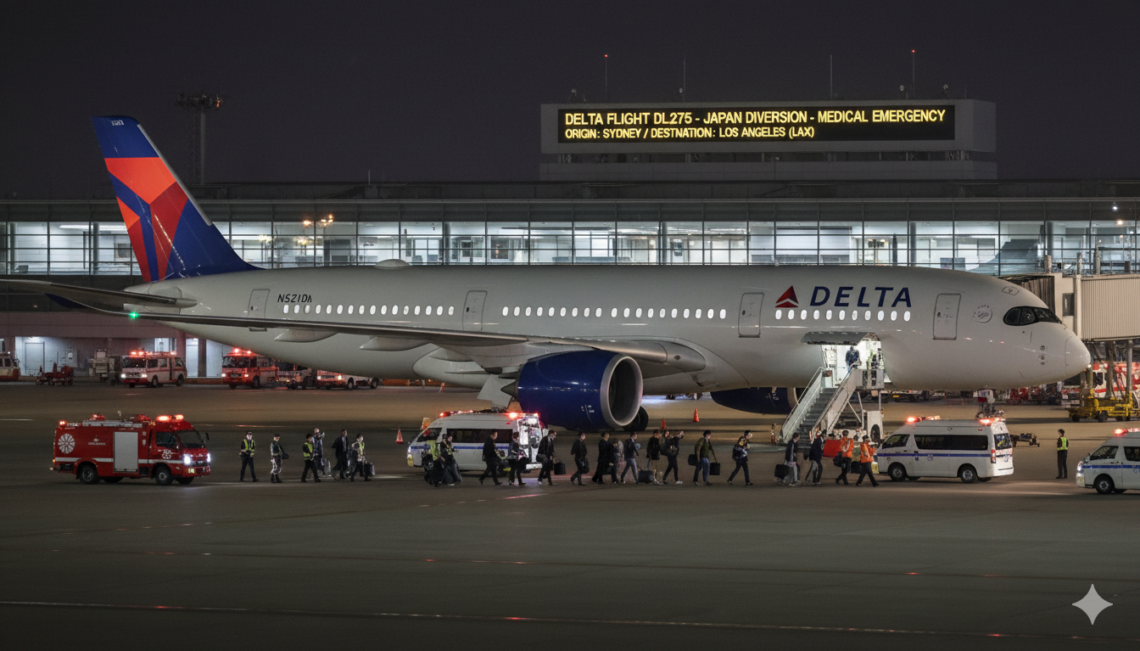
Have you ever boarded a plane expecting to wake up in a different country, only to land right back in the same one 12 hours later? That is exactly what happened to passengers on a recent Delta flight. The delta flight dl275 japan diversion lax incident has become a hot topic for travelers and aviation fans alike. It is a story of safety first, technical glitches, and the long road (or flight path) to Tokyo.
In this article, we will break down the “why” and “how” of this unusual event. We will look at the mechanical problems that caused the delta flight dl275 japan diversion lax and what it was like for the people on board. Whether you are a frequent flier or just curious about how airlines handle emergencies, there is plenty to learn from this transpacific turnaround.
Understanding the Delta DL275 Route
Normally, Delta flight DL275 is a premier service connecting the United States to Japan. This long-haul flight usually takes off from Detroit (DTW) and heads straight for Tokyo Haneda Airport (HND). It is a journey that covers thousands of miles across the northern Pacific Ocean. Delta uses the advanced Airbus A350-900 for this route because it is built for comfort and long distances.
However, during the delta flight dl275 japan diversion lax event, the routine was broken. Instead of the usual 13-hour trek to Japan, the aircraft spent over 12 hours in the air only to touch down in Southern California. For the passengers, it felt like a “flight to nowhere,” even though the pilots were working hard to keep everyone safe.
The Timeline of the Diversion
The trouble began shortly after the flight left Detroit. While the plane was high above the Bering Sea—near the boundary between Alaska and Russia—the crew noticed a technical issue. At this point, the delta flight dl275 japan diversion lax process began. Instead of pushing forward into the remote Pacific, the captain made the call to turn around.
Even though the plane turned back, it didn’t go back to Detroit. It headed south toward Los Angeles. By the time the wheels touched the runway at LAX, the passengers had been in the air for almost as long as a full trip to Japan. This made the delta flight dl275 japan diversion lax one of the longest diversions in recent memory.
Why Did the Plane Go to LAX?
You might wonder why a plane near Alaska would fly all the way to Los Angeles. Why not land in Anchorage or Seattle? The answer lies in airline logistics. LAX is a massive hub for Delta Air Lines. This means they have plenty of mechanics, spare parts, and extra planes available there.
Choosing LAX for the delta flight dl275 japan diversion lax ensured that Delta could take better care of the passengers. A bigger airport means more hotel rooms and more options for rebooking flights. While it added hours to the flight time, it was a strategic choice to make the “fix” easier once the plane was on the ground.
Mechanical Issues: The Anti-Ice System
The main reason for the delta flight dl275 japan diversion lax was a fault in the engine’s anti-ice system. When planes fly at high altitudes or through cold clouds, ice can build up on the engines. This is dangerous because it can disrupt the airflow and cause the engine to lose power.
On this specific Airbus A350, a sensor or valve in the anti-ice system reportedly failed. Pilots cannot risk flying across the vast Pacific Ocean without a working anti-ice system. If they had continued toward Japan and hit a storm, the situation could have become much worse. The delta flight dl275 japan diversion lax was the safest possible decision.
Passenger Experience Onboard
Imagine being tucked in for a long nap, hoping to see Mount Fuji when you wake up, and hearing an announcement that you are headed to California instead. Many travelers on the delta flight dl275 japan diversion lax expressed their frustration on social media. They were tired, confused, and worried about their connections in Tokyo.
One passenger shared that the crew was very professional. They kept everyone calm and explained that safety was the number one priority. Even though the delta flight dl275 japan diversion lax was a massive delay, most people understood that they would rather be on the ground in LA than in trouble over the ocean.
How Delta Handled the Grounding
Once the plane landed at LAX at 1:00 AM, the real work for Delta began. Since it was the middle of the night, finding hotels for hundreds of people was a challenge. During the delta flight dl275 japan diversion lax aftermath, Delta provided meal vouchers and started the process of finding new seats for the stranded travelers.
Summary Table: Flight DL275 Details
| Feature | Planned Flight | Diversion Reality |
| Origin | Detroit (DTW) | Detroit (DTW) |
| Destination | Tokyo Haneda (HND) | Los Angeles (LAX) |
| Aircraft Type | Airbus A350-900 | Airbus A350-900 |
| Reason for Change | N/A | Engine Anti-Ice Issue |
| Total Air Time | ~13 Hours | 12 Hours 15 Minutes |
Safety Protocols for Transpacific Flights
Flying across the ocean requires something called ETOPS (Extended-range Twin-engine Operational Performance Standards). These rules require planes to always stay within a certain distance of an airport where they can land if an engine fails. The delta flight dl275 japan diversion lax shows these rules in action.
Because the anti-ice system was acting up, the pilots knew they couldn’t follow the strict safety rules required for the remote “great circle” route to Japan. By initiating the delta flight dl275 japan diversion lax, they stayed within reach of land and followed international safety laws to the letter.
The Role of the Airbus A350
The Airbus A350 is a very smart plane. It has thousands of sensors that check every part of the engine every second. In the case of the delta flight dl275 japan diversion lax, these sensors did exactly what they were supposed to do. They alerted the pilots to a problem before it became a crisis.
Impact on Japan Travel Plans
For many on board, this wasn’t just a delay; it was a ruined vacation or a missed business meeting. The delta flight dl275 japan diversion lax meant that people arrived in Tokyo nearly two days late. In the travel world, this is a “cascading delay,” where one problem leads to many others.
Frequently Asked Questions
1. Why did Delta flight DL275 divert to LAX instead of Tokyo?
The flight diverted because of a mechanical issue with the engine’s anti-ice system. This system is necessary for safety when flying through cold, wet air over the Pacific.
2. How long were the passengers in the air during the diversion?
Passengers spent about 12 hours and 15 minutes in the air. This is almost as long as the entire planned flight to Japan!
3. Did the passengers get a refund for the diversion?
Delta typically provides compensation, such as travel vouchers or SkyMiles, for major delays. In cases of mechanical failure, the airline is usually responsible for hotel and meal costs.
4. Is the Airbus A350 safe to fly?
Yes, the Airbus A350 is one of the safest and most advanced planes in the sky. The fact that it detected a small system fault and allowed the pilots to land safely is a testament to its safety.
5. Could the plane have landed in Alaska?
While it could have landed in Anchorage, Delta chose LAX because it is a major hub with better resources to fix the plane and help the passengers.
6. What is an anti-ice system?
It is a system that uses heat from the engine to keep ice from forming on the wings and engine inlets. It is vital for flying in cold climates.
Conclusion
The delta flight dl275 japan diversion lax is a perfect example of why aviation is so safe today. Even when things go wrong, there are plans in place to handle the situation. While nobody wants to spend 12 hours on a plane just to end up in California, everyone on that flight got home safely because the pilots and Delta chose caution over risk.
If you are ever on a flight that gets diverted, remember to stay calm and check your airline’s app for updates. Airlines like Delta have teams working 24/7 to get you back on track.