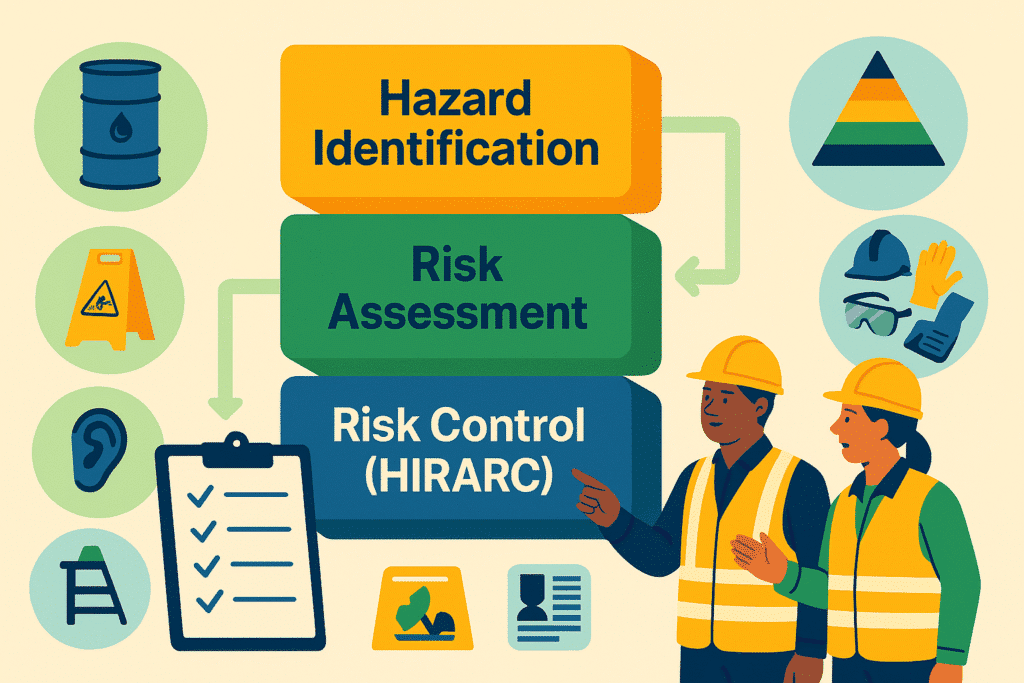
Every work accident has an associated story. Hazard Identification and Risk Assessment is about breaking the story before an accident occurs. Hazard Identification and Risk Assessment is the scientific study of identifying what could go wrong, determining the seriousness of the problem, and deciding what to do about it. Sounds simple, doesn’t it? HIRA is arguably the most impactful safety practice an organization can invest in.
Hazard identification and risk assessment are the two foundational processes in the field of occupational health and safety. The proactive approach of these two processes is essential in the creation of a safe work environment, as these processes are geared towards mitigating potential hazards that could cause accidents. The guide below will highlight the essential components, methodologies, and best practices for the two processes, thus providing an organization with the necessary tools for ensuring safety in the work environment.
What Is Hazard Identification and Risk Assessment?
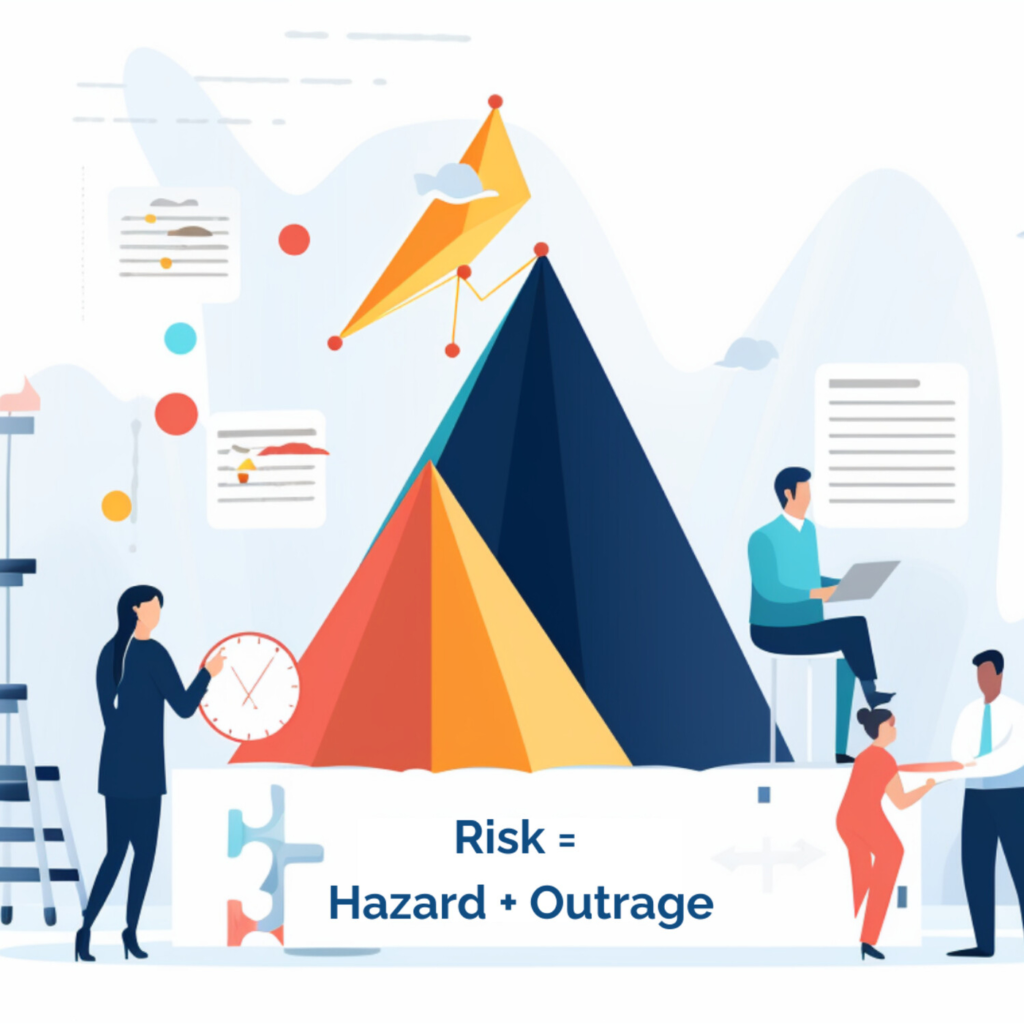
The Hazard Identification and Risk Assessment (HIRA) is the process by which potential hazards are identified in the working environment and the level of risk that is posed is assessed, and mitigating steps are taken to eliminate or minimize such risks. A hazard is any potential source of harm and may range from a wet floor to machinery, chemicals, and even stress levels. Risk is the likelihood that the hazard will cause harm and the level of harm that is possible. The steps in HIRA usually begin by identifying the hazard, identifying who could be harmed and how, assessing the level of risk, and determining the control measures. The most common question often asked- who is responsible for conducting a hazard assessment? The answer is everyone is responsible, but someone has to lead.
The major responsibility rests on the shoulders of the employers. Under health and safety regulations in most countries, employers have a legal responsibility to assess the risks that their employees face and act on the results. This does not mean that the employer has to perform the assessment themselves, but they have the responsibility to ensure that the assessment is carried out and acted upon.
The responsibility of conducting the hazard assessment rests with the supervisors, safety officers, department managers, and health and safety representatives. However, the employees have a major part to play in the process. They are the first ones to identify new hazards and changes in the environment that might pose a new risk. It is a measure of a mature organization if the employees are encouraged to report the hazards.
Why It Matters for Compliance?
Regulatory authorities across the world mandate that employers perform and record risk assessments. Non-performance of adequate Hazard Identification and Risk Assessment can lead to hefty fines, lawsuits, and damage to an organization’s image. However, what is more serious is that it endangers lives. It is not just about checking the box; it is the starting point from which safer operations begin.
The Role of HIRA in Incident Prevention
The strongest argument for Hazard Identification and Risk Assessment is that it stops accidents from happening in the first place. If we identify the hazards and implement controls, we break the chain of events that leads to an injury or near-miss before the accident happens. Data shows that organizations that have strong risk assessment processes have fewer accidents, lower absenteeism, and lower insurance costs. But beyond the statistics, the value of the process lies in the fact that if we prevent an accident from happening, we are protecting an individual’s way of living.
How to Conduct Hazard Assessments Safely in the Workplace?
Here are the structured outline of the major practices for effective and better hazard assessment in the workplace-
1. Collect Existing Information- Collect the operating manuals, Safety Data Sheets (SDS), self-inspection results, and past incident reports. Analyze the OSHA 300 and 301 logs, workers’ compensation reports, and near-miss reports. Industrial hygiene results and medical surveillance reports should be included in the analysis, with the necessary privacy provisions in place. External sources of information can be obtained from OSHA, NIOSH, CDC, industry associations, and unions for the latest hazard alerts and industry best practices. Employee contributions can be obtained by surveying the employees, safety meeting minutes, and job safety analyses.
2. Inspect the Workplace for Safety Hazards- Regularly inspect the workplace for safety hazards, including obvious and not-so-obvious workplace hazards. All work areas must be inspected, including the office, warehouse, maintenance area, and storage area. Vehicles and transportation equipment must be given special attention. Work conditions must be checked when introducing new equipment or processes in the workplace. Employees must be included in the inspection process for better results.
3. Identify Health Hazards- Assess potential health hazards from chemical, biological, physical, and ergonomic sources that are not immediately apparent. Review the SDS to identify hazardous chemicals, especially those used in large quantities or confined spaces. Check for physical agents such as high noise levels, radiation, and temperature extremes. Check for potential health effects from biological agents such as viruses, mould, and animal products. Check for potential health effects from ergonomics such as repetitive motions, heavy lifting, and vibrations. Conduct an exposure assessment with air sampling equipment or other direct-reading devices. Review redacted medical records to determine if any patterns could be related to the work environment.
4. Conduct Incident Investigations- Incidents, near-miss events, and employee reports are used to identify underlying hazards and improve safety measures. Create an investigation process and determine the materials and personnel to be used in advance. Train the investigation team with management and worker representation. Investigate not just injuries but also near-miss events. Not just the symptoms, but the root causes should be investigated. Ask detailed questions to uncover root cause failure in systems, training programs, and supervision.
5. Identify Hazards in Emergency Situations- Identify risks that could result from rare and irregular events such as maintenance and emergency procedures. Identify the various emergency scenarios that could occur in the organization. The emergency scenarios could result from chemical spills, fires, extreme weather conditions, and violence. The processes to consider could include startup and shutdown procedures and non-routine maintenance procedures. The unique risks could result from the materials used and the design of the organization. The organization should develop plans and procedures to deal with emergency scenarios safely.
6. Evaluate and Prioritize Hazards for Control- Characterize every hazard identified to determine the level of risk and develop interim and long-term control measures. Evaluate every identified hazard to determine the level of risk and develop interim and long-term control measures. The evaluation should consider the level of risk and the likelihood of the hazard. Estimate the number of workers exposed and under what conditions. The organization should develop interim control measures while long-term control measures are planned. The organization should prioritize every identified hazard according to the level of risk. The organization should deal with every identified hazard and not just those with high levels of risk.
Final Thoughts
Hazard Identification and Risk Assessment is not just an exercise. It is an effective tool to protect people, comply with the law, and operate in an efficient and sustainable way. Being aware of who is responsible for carrying out the hazard assessment and making sure that responsibility is clearly assigned and fulfilled. It is the first step towards making safety not just a policy statement but a reality.