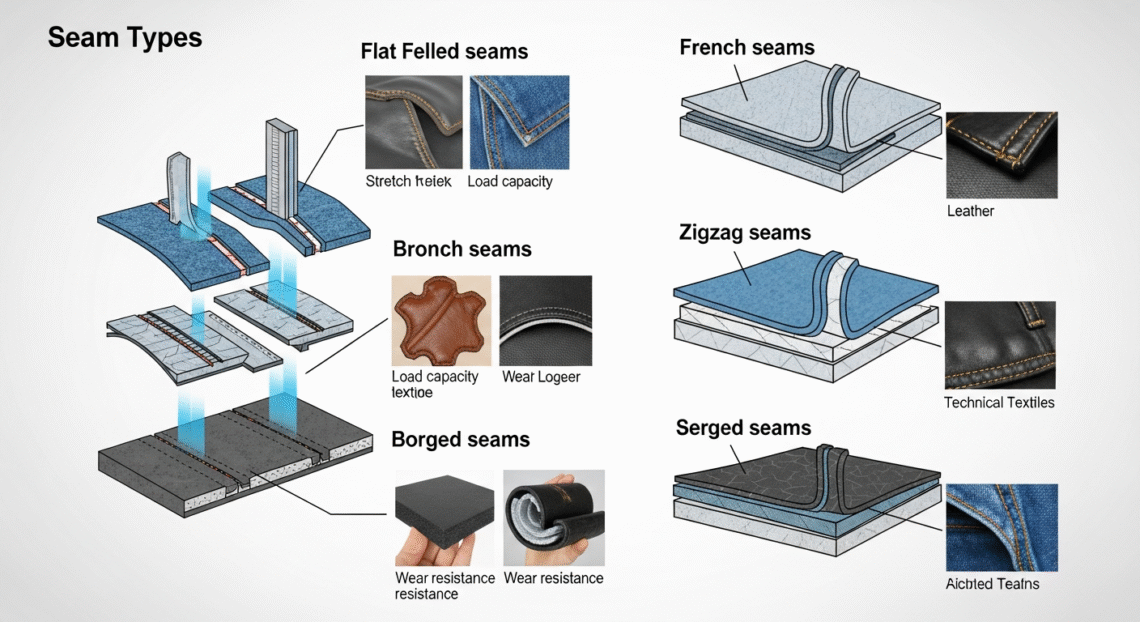
Nahttypen define how fabrics, leather, or technical materials connect. Therefore, choosing the correct seam structure improves durability, comfort, and design. Additionally, seam selection affects stretching, load capacity, and wear resistance. With the right knowledge, projects become stronger, cleaner, and more professional without repetition or material waste.
What Does the Term Nahttypen Mean?
Nahttypen refers to different seam construction methods that join two or more layers. Moreover, each structure influences elasticity, thickness, and visual appearance. With suitable choices, stitching becomes long-lasting and stable. Therefore, understanding Nahttypen is essential in sewing, textile engineering, upholstery and industrial production.
Why Are Nahttypen So Important in Fabric Construction?
Nahttypen determine the performance of garments, accessories, and technical textiles. Furthermore, seam selection impacts movement comfort, shape retention, and resistance to tension. Additionally, strong seams prevent tearing under stress. Consequently, projects look sharper, last longer and feel smoother in daily use.
Main Categories of Nahttypen
Nahttypen typically fall into connector seams, security seams, or decorative finishes. Furthermore, hybrid forms combine strength and visual impact. Below is a detailed breakdown with usage examples, benefits, construction behavior and handling characteristics.
1. Straight Stitch – Foundation of All Nahttypen
The straight stitch forms basic, clean and stable lines. Moreover, it works for cotton, denim, canvas and synthetic textiles. It creates precision edges, smooth alignment and strong anchoring. Therefore, this stitch supports most clothing, cushions and structural seams without difficulty.
2. Zigzag Stitch – Elastic and Tear Resistant
Zigzag is one of the most flexible Nahttypen. Also, the curved movement allows fabrics to expand without breaking. This makes it ideal for jersey, swimwear and stretch materials. Additionally, edge-overcasting prevents fraying. As a result, seams remain strong even under body movement or sport tension.
3. Overlock Seam – Clean, Professional Finish
Overlock trims raw edges, seals layers and stitches simultaneously. Additionally, this reduces steps and saves production time. It is commonly used in factories, activewear and interior textiles. Since the finish looks neat and enclosed, products appear high-quality and polished without extra hemming.
4. Double-Fell Seam – Extremely Strong
This seam folds fabric twice, locking layers firmly. More importantly, it handles pulling pressure and abrasion. Jeans, work uniforms and outdoor equipment use this construction for endurance. With dual stitching, the seam becomes thick, stable, and visually bold.
5. Flatlock Stitch – Smooth Against Skin
Flatlock belongs to modern Nahttypen that eliminate raised seams. Furthermore, fabric lies flat, preventing skin irritation and chafing. Because of this, sportwear, base-layers and underwear depend heavily on flat seams. Comfort remains high even through movement, stretching and sweat.
6. Hem Seam – For Clean Edge Finishing
Hem seams create neat borders and stop unraveling. Besides aesthetics, they reinforce length edges and ensure durability. Dresses, curtains, sleeves and blankets all require proper hemming. Depending on the design, hems may appear visible or invisible while staying strong.
How to Choose the Right Nahttypen?
Nahttypen must match fabric thickness, elasticity, purpose and strain level. Additionally, flexible fabrics require stretchable stitches, while heavy textiles need reinforced tension lines. Proper selection increases wear life, shape stability and textile performance. Testing scrap pieces first avoids seam failure during final assembly.
Material Influence on Nahttypen
Different materials respond uniquely to stitching. Thick denim tolerates heavy thread, while silk requires fine needle control. Stretch blends benefit from zigzag or flatlock, preventing thread snapping. Testing tension, stitch length and thread type improves accuracy and smoothness. Small adjustments prevent puckering or seam tunnel formation.
Load & Wear – Strength-Based Seam Selection
Seams used in sports, workwear or backpacks must withstand friction, pulling and repetitive stress. Pair straight stitch with overlock for stability and clean edges. This combination holds shape through washing, stretching and weight pressure. Consequently, textile performance increases alongside user satisfaction.
Decorative Nahttypen – Seam Function + Design Impact
Some Nahttypen serve decoration as much as structure. Decorative stitches create curves, motifs and attention lines. Additionally, color contrast enhances style identity in apparel. Seam art is used in leather goods, jackets and handmade crafts to elevate branding and visual appeal.
Industry Use of Nahttypen in Technology
In industrial fields, Nahttypen secure safety harnesses, automotive seats and protective gear. High tensile thread resists tearing and environment damage. Heat-proof and waterproof seams protect workers and mechanical equipment. Because reliability is crucial, construction must be accurate, repeatable and machine controlled.
Nahttypen in Fashion & Craft
Fashion depends on seam architecture for silhouette and movement. Flatlock highlights athletic contours, while double-fell emphasizes rugged styling. Well-built seams increase clothing value and comfort. With correct stitching knowledge, designers produce premium garments that stand out in fit and durability.
Care Tips to Extend Seam Life
Gentle wash cycles reduce tension on seam threads. Air-drying prevents fiber warping and shrink stress. Pressing seams carefully improves structure without melting synthetics. Regular inspection prevents small breaks from turning into large damage. Repairing early protects the structural integrity longer.
Avoiding Mistakes When Working With Nahttypen
Incorrect stitch length, wrong needle type or mismatched thread tension cause seam damage. Working steadily prevents stretching or distortion. Pinning guides improve accuracy, especially around curves and armholes. Seam planning before sewing reduces waste and enhances final workmanship.
Future of Nahttypen – Smart Textiles & Automation
Seam technology continues evolving with AI automation, precision robotics and recyclable fibers. Smart garments require flexible sensor-compatible Nahttypen. Automated cutters optimize fabric use while reducing production errors. Sustainable threads strengthen performance without environmental cost.
Conclusion
Nahttypen determine strength, appearance and comfort in every textile product. With this guide, choosing the perfect seam becomes clearer, faster and more efficient.
FAQs
1. What are Nahttypen?
Different seam types used to join materials with varying strength, flexibility and visual effects.
2. Which seam works best for stretch fabrics?
Zigzag or flatlock, because both expand naturally without thread breakage.
3. What are the strongest Nahttypen?
Double-fell seams and overlock constructions perform exceptionally under load.
4. How can I prevent seam errors?
Correct needle size, balanced tension and slow guiding reduce distortion and breaks.
5. Can seams be used decoratively?
Yes, decorative stitching adds style accents, texture and visual branding.