If you want to learn digital marketing, knowing the right syllabus is very important. The digital marketing syllabus is like a roadmap. It tells you what to study, how to start, and what skills you will gain. Whether you want to become a digital marketer or start a business online, this syllabus will help you understand all key topics step by step.
In this article, we will explain the full digital marketing syllabus in simple words. You will learn what topics are included, why they matter, and how they help you in your career. So, let’s dive into this easy-to-understand guide!
What Is a Digital Marketing Syllabus?
A digital marketing syllabus is a list of important subjects that teach you how to promote products or services online. It covers many areas like websites, search engines, social media, ads, emails, and more. This syllabus helps beginners to know what to learn first and what to study next.
By following this syllabus, you get a clear path to master digital marketing. It also helps teachers plan lessons and students track their progress.
Why Is a Digital Marketing Syllabus Important?
If you start learning without a syllabus, you may miss some key skills. The digital marketing syllabus gives you a clear plan. It makes learning easier and faster. Also, many top digital marketing courses follow a similar syllabus, so you get the best knowledge.
Following the syllabus will help you understand marketing better. You will know how to reach customers online and grow your business or career step by step.
Main Topics in Digital Marketing Syllabus
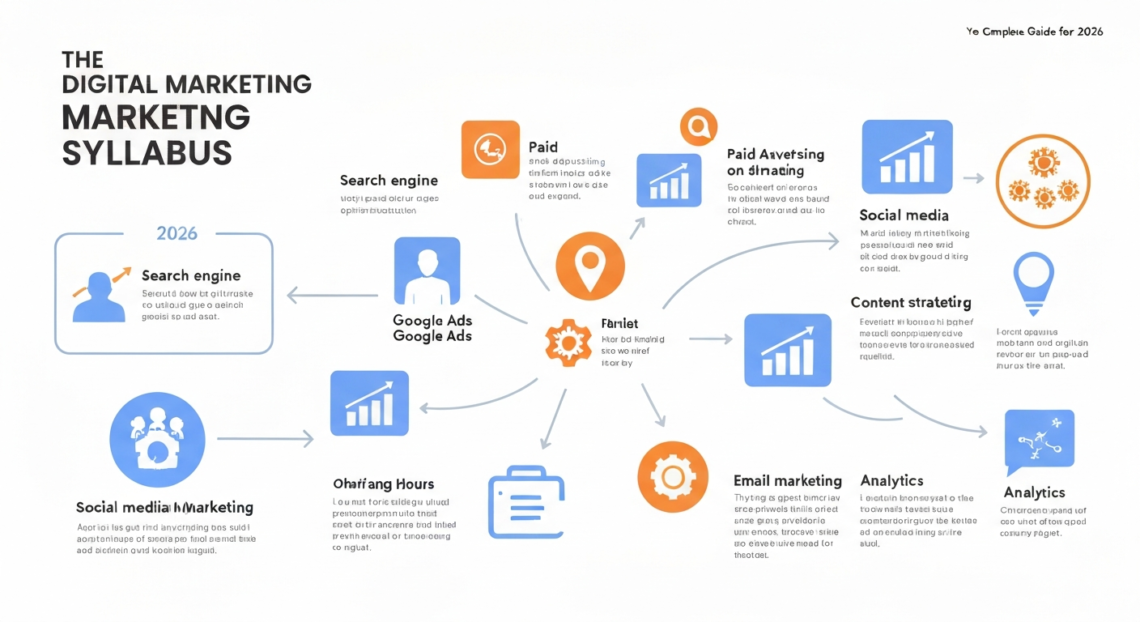
The digital marketing syllabus usually covers these main areas:
- Introduction to Digital Marketing
Understand what digital marketing is and why it’s important today. - Search Engine Optimization (SEO)
Learn how to make websites rank higher on Google. - Search Engine Marketing (SEM)
Learn paid ads like Google Ads to get fast traffic. - Content Marketing
Discover how to create helpful content that attracts people. - Social Media Marketing
Use platforms like Facebook, Instagram, and LinkedIn to promote brands. - Email Marketing
Learn to send emails that people want to open and read. - Affiliate Marketing
Understand how to earn money by promoting others’ products. - Web Analytics
Learn to measure website and campaign success using tools like Google Analytics. - Mobile Marketing
Study marketing on mobile apps and SMS. - Online Reputation Management
Learn to keep a good online image for brands or people.
Detailed Breakdown of the Digital Marketing Syllabus
1. Introduction to Digital Marketing
You start with understanding digital marketing basics. This includes how it is different from traditional marketing. You also learn digital marketing tools and career options.
2. SEO (Search Engine Optimization)
SEO is about improving your website to rank on Google for free. You learn keyword research, on-page SEO, off-page SEO, link building, and technical SEO.
3. SEM (Search Engine Marketing)
SEM teaches paid advertising. You learn to create and manage Google Ads campaigns. This helps get instant visitors and leads.
4. Content Marketing
Creating great content is the heart of digital marketing. You learn how to write blogs, create videos, and share content that people love.
5. Social Media Marketing
Social media helps brands connect with their audience. You learn to use Facebook, Instagram, Twitter, and LinkedIn for marketing.
6. Email Marketing
Email marketing is sending emails that make customers take action. You learn how to build an email list and design campaigns.
7. Affiliate Marketing
Affiliate marketing is earning a commission by promoting others’ products. You learn the best platforms and strategies.
8. Web Analytics
Web analytics helps you understand user behavior. You learn tools like Google Analytics and how to track goals.
9. Mobile Marketing
Mobile marketing focuses on mobile users through apps, SMS, and push notifications.
10. Online Reputation Management
ORM teaches how to protect and improve online reputation using reviews and social media.
Extra Topics in Some Syllabuses
Some courses also add:
- E-commerce marketing
- Video marketing
- Influencer marketing
- Marketing automation tools
How to Use the Digital Marketing Syllabus?
Start learning each topic one by one. Practice with real examples like creating your blog or social media pages. Take online quizzes and use free tools like Google Keyword Planner and Google Analytics.
Personal Insight: Why Following a Syllabus Helped Me
When I first learned digital marketing, I followed a clear syllabus. It helped me avoid confusion and focus on the right topics. Practicing each part gave me confidence to work on real projects.
Frequently Asked Questions (FAQs)
1. How long does it take to complete the digital marketing syllabus?
It depends on your pace, but usually 3 to 6 months with regular study.
2. Do I need technical skills for digital marketing?
Basic computer knowledge is enough to start. You will learn technical parts during the course.
3. Can I learn digital marketing for free?
Yes, many free courses and videos are available online. Paid courses give deeper knowledge and certificates.
4. Is digital marketing syllabus same for all courses?
Most courses cover similar topics, but some may focus more on specific areas.
5. What is the best way to practice digital marketing?
Create your own website or blog and try applying SEO, content marketing, and ads.
6. Will this syllabus help me get a job?
Yes, following this syllabus and gaining skills can open many job opportunities.
Conclusion
The digital marketing syllabus is your key to learning this exciting field. It guides you through every important topic clearly. By following it, you can build a strong career or grow your business online. Start today, keep practicing, and watch your skills grow!
If you want to explore more or have questions, feel free to ask. Happy learning!